AI is generating…
environmental problems
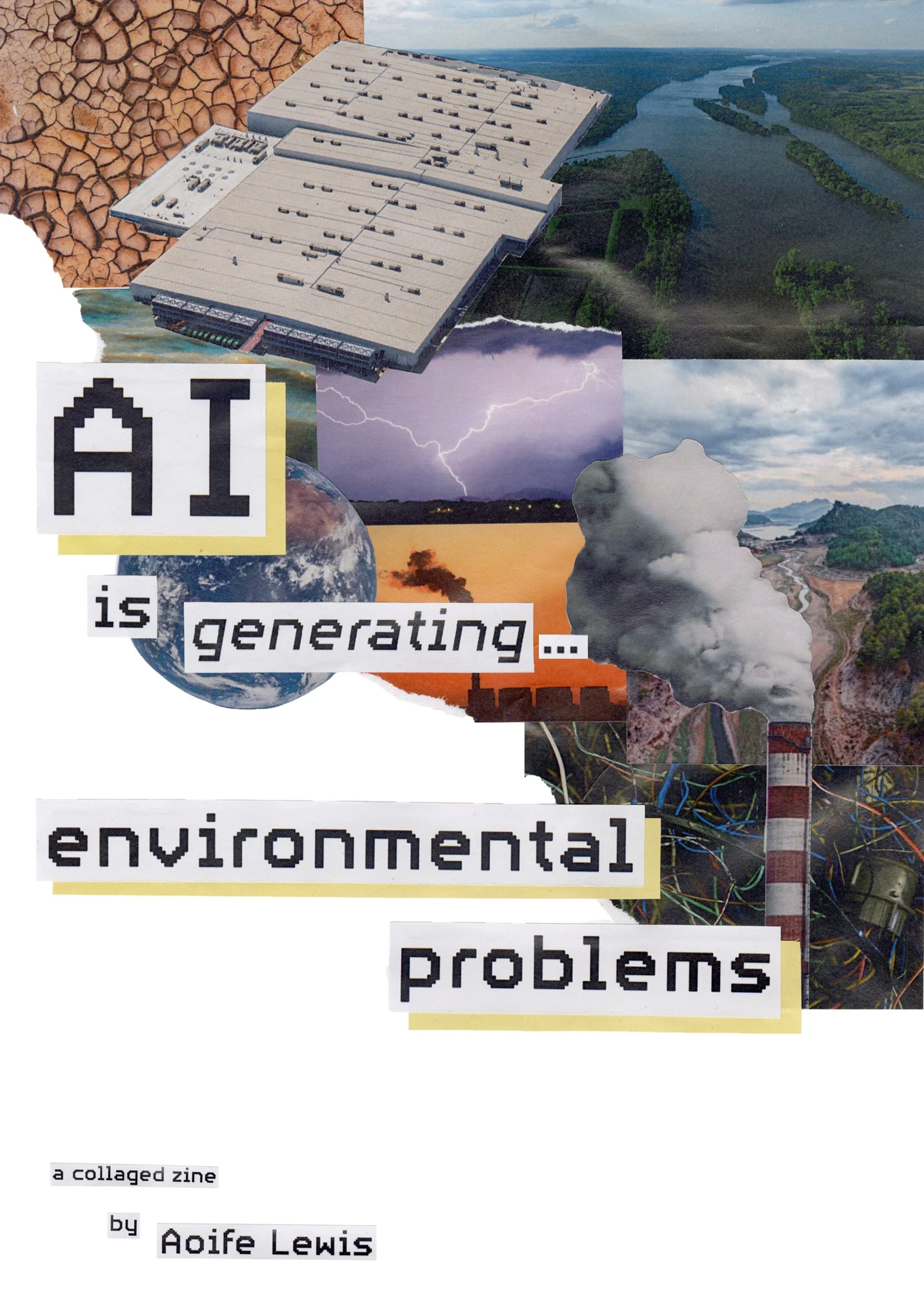
A body of collage work and zine exploring the environmental issues caused by generative AI.
Exhibited at the Atrium Gallery in the John Lennon Art and Design Building, LJMU, August 2026.
The Zine
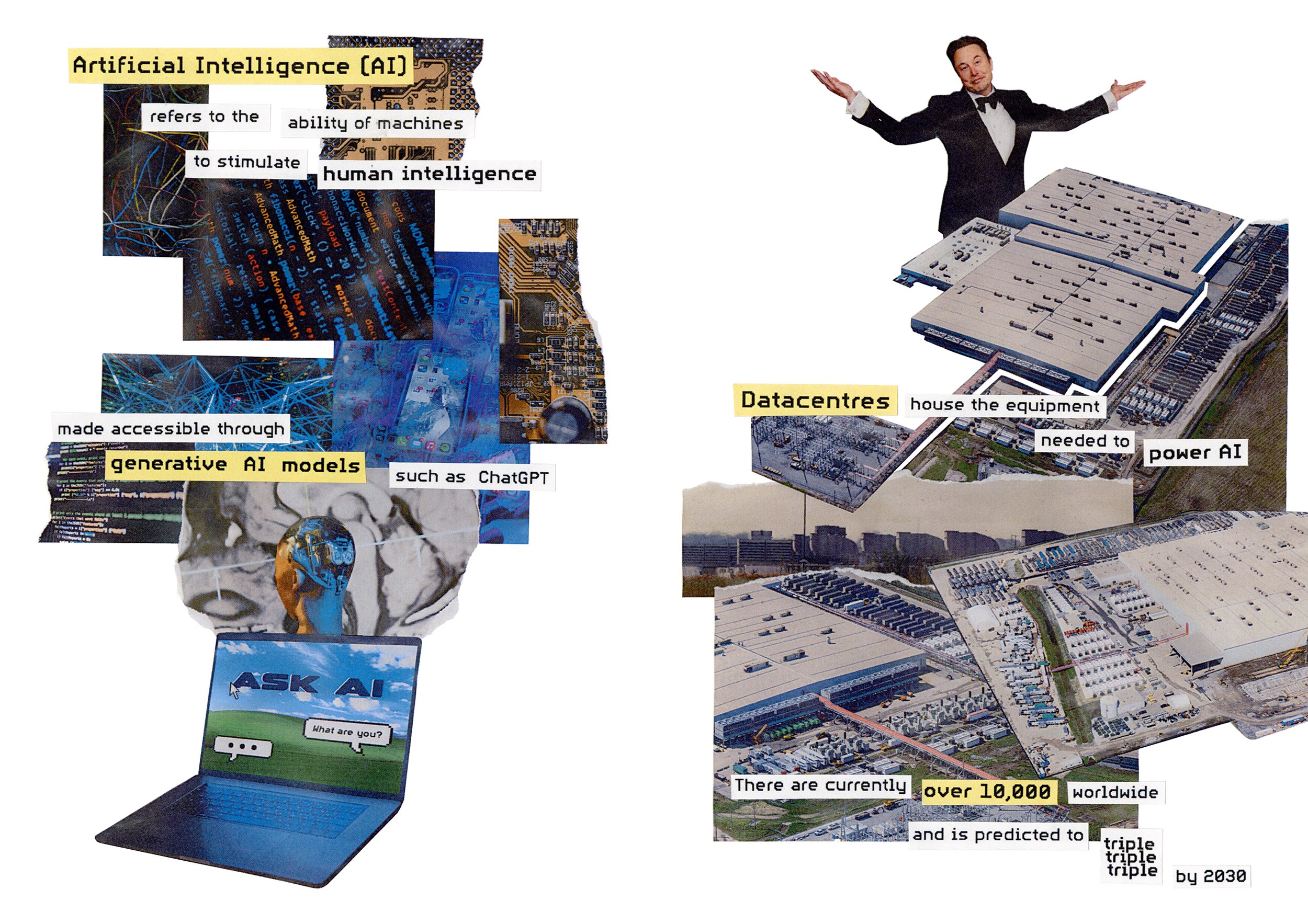
“AI is generating… environmental problems” was created through practice-led, reflexive methodologies . The zine aims to use collaged visuals and engaging text to communicate the environmental issues of generative AI and its datacentres.
The zine was developed through contextual research, collage production, zine making, peer review and exhibition. Research into the science behind the unsustainable practises of AI datacentres formed the idea and gave context for the artwork. The 12-page zine was finalised after multiple drafts, combining physical and digital collage, and through peer review, the composition and style of the zine evolved.
By incorporating science, politics, humour and activism, the zine aims to act as a tool for science communication, accessible to a wide audience. The zine was evaluated through anonymous survey after being exhibited alongside the body of collage work created for the zine.
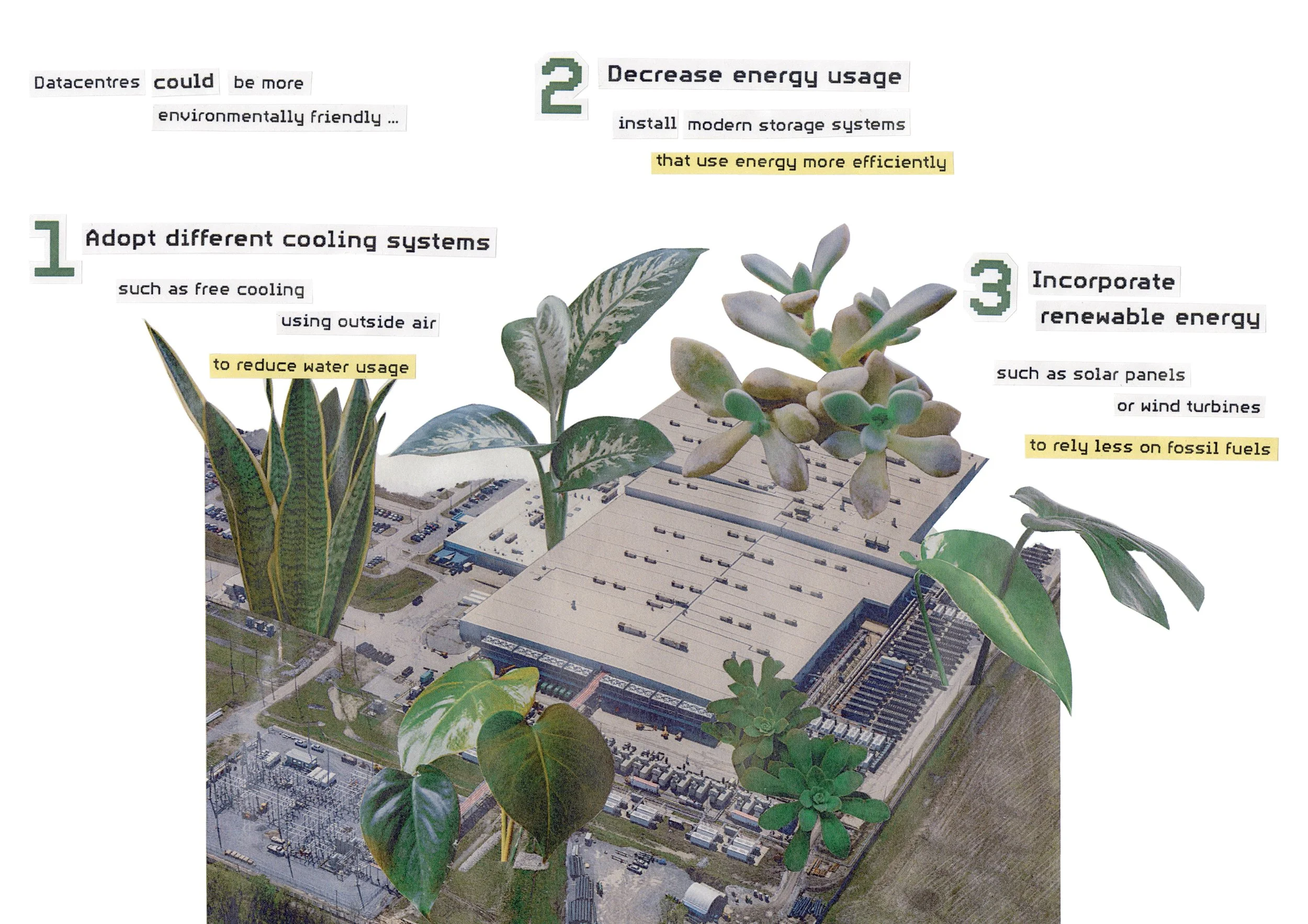
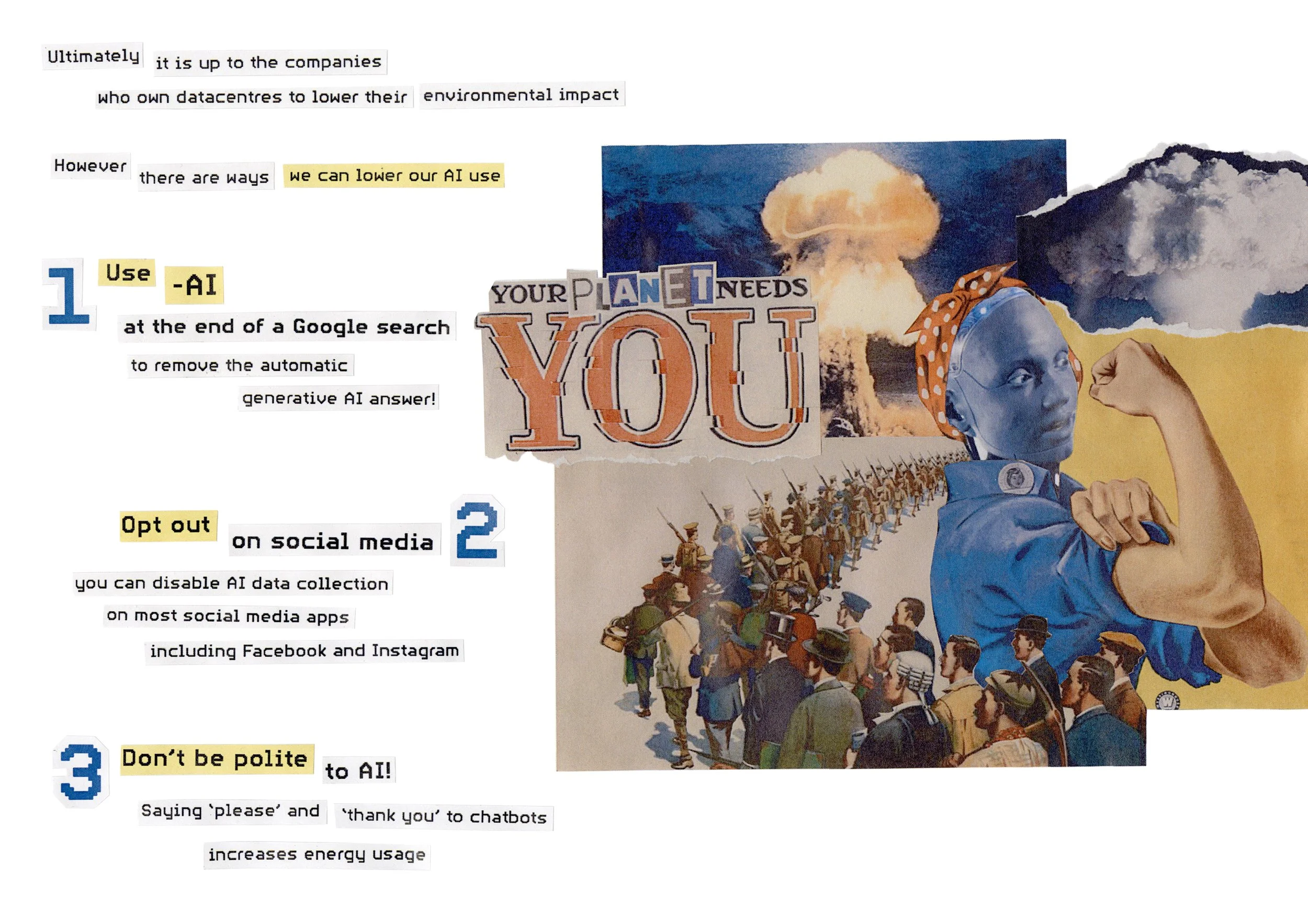
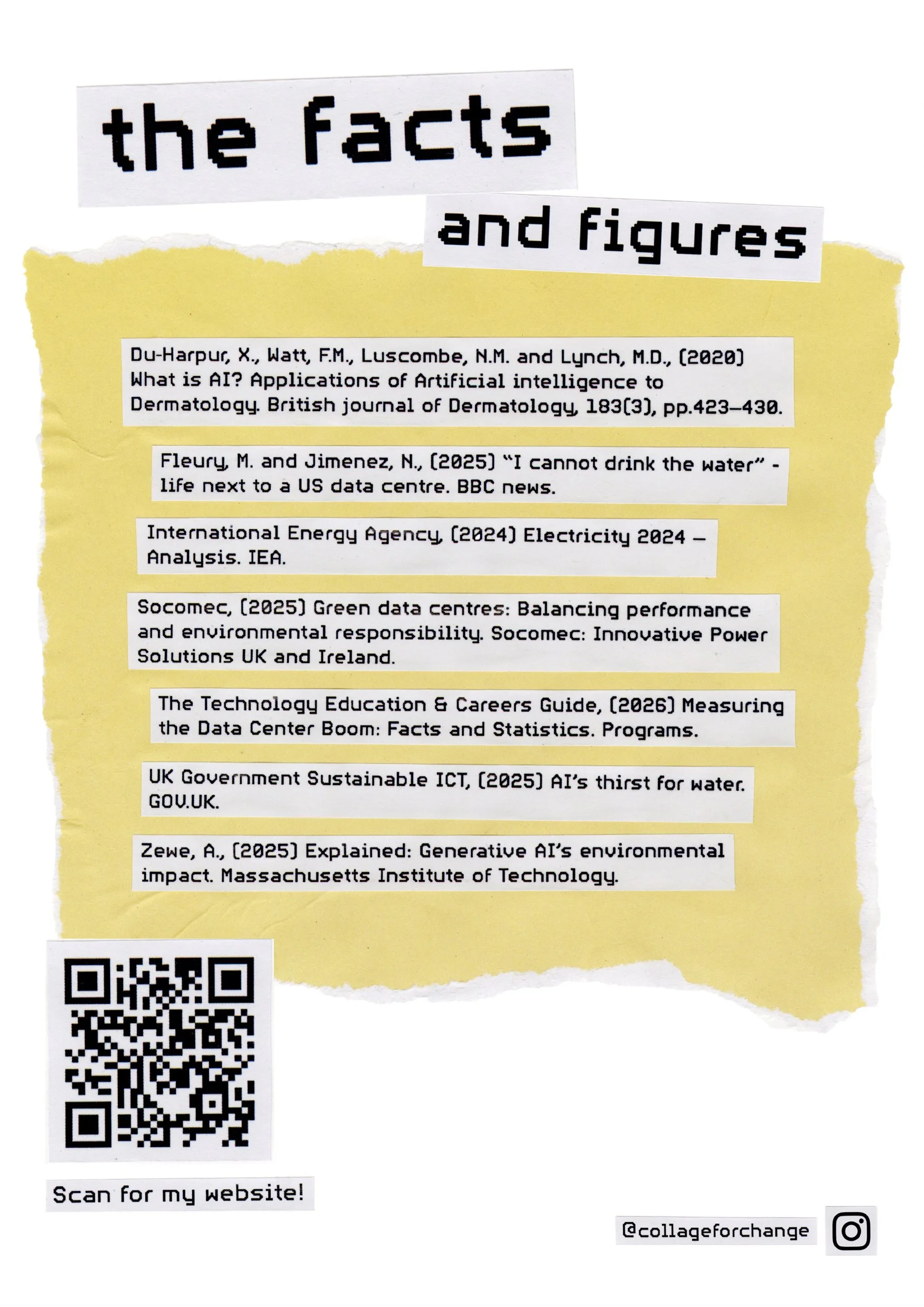
The Science
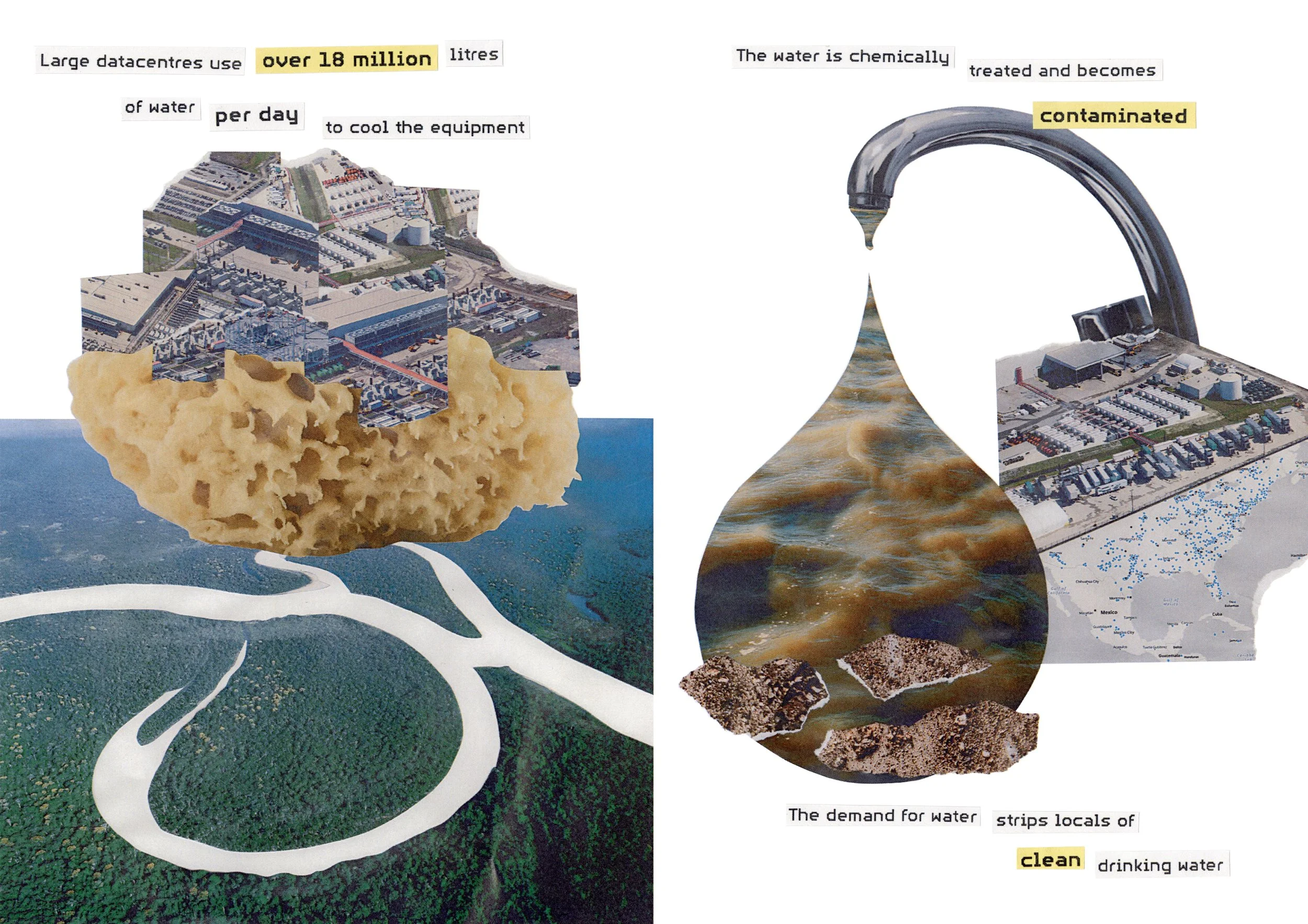
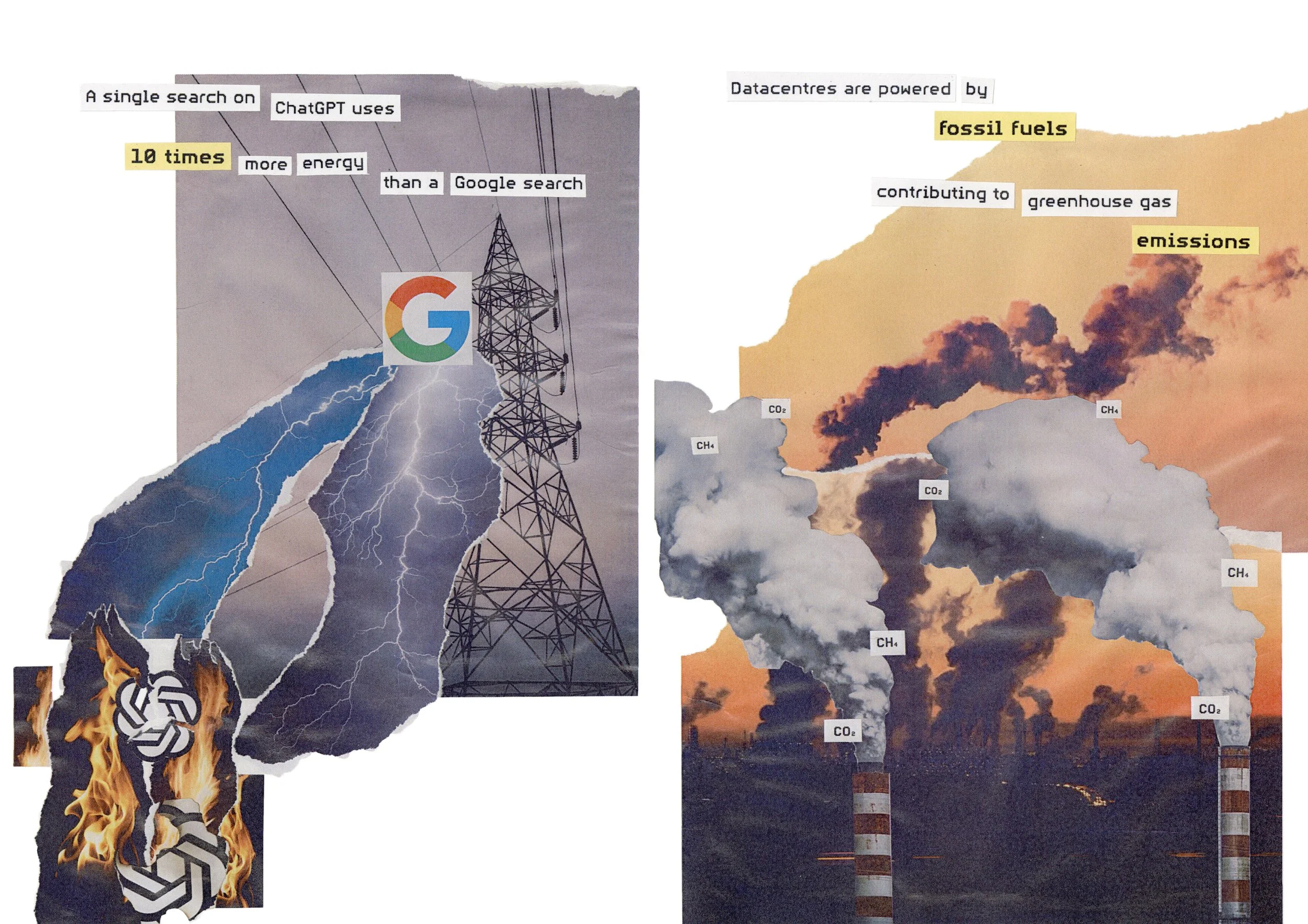
Generative AI is designed to simulate human intelligence which require vast amounts of computing equipment and electricity. These data centres are temperature-controlled buildings that store the computing infrastructure that makes AI possible. Most of 10,000 data centres worldwide are powered by fossil fuels and use millions of litres of water per day to keep the equipment cool, causing increased greenhouse gas emissions, unsustainable water usage and increased energy use.
The Collages
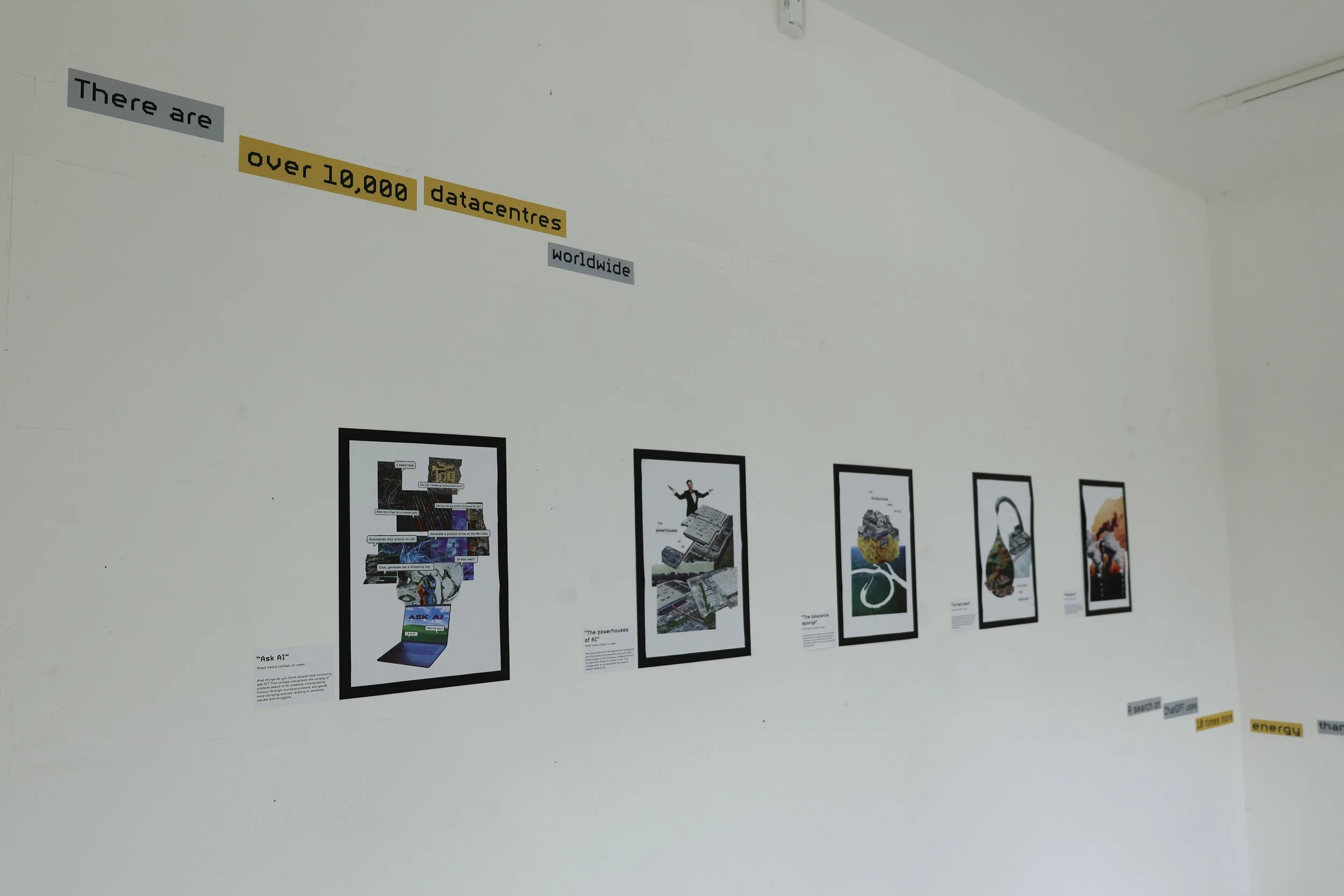
The collages below were created alongside the zine. The individual A3 collages were scanned and used digitally in the creation of “AI is generating… environmental problems”, however they were also designed to be stand alone artworks.
The works include limited text in comparison to the zine, designed to be interpreted as visual pieces. This body of collage work was exhibited alongside the zine, with each piece titled and briefly explained.
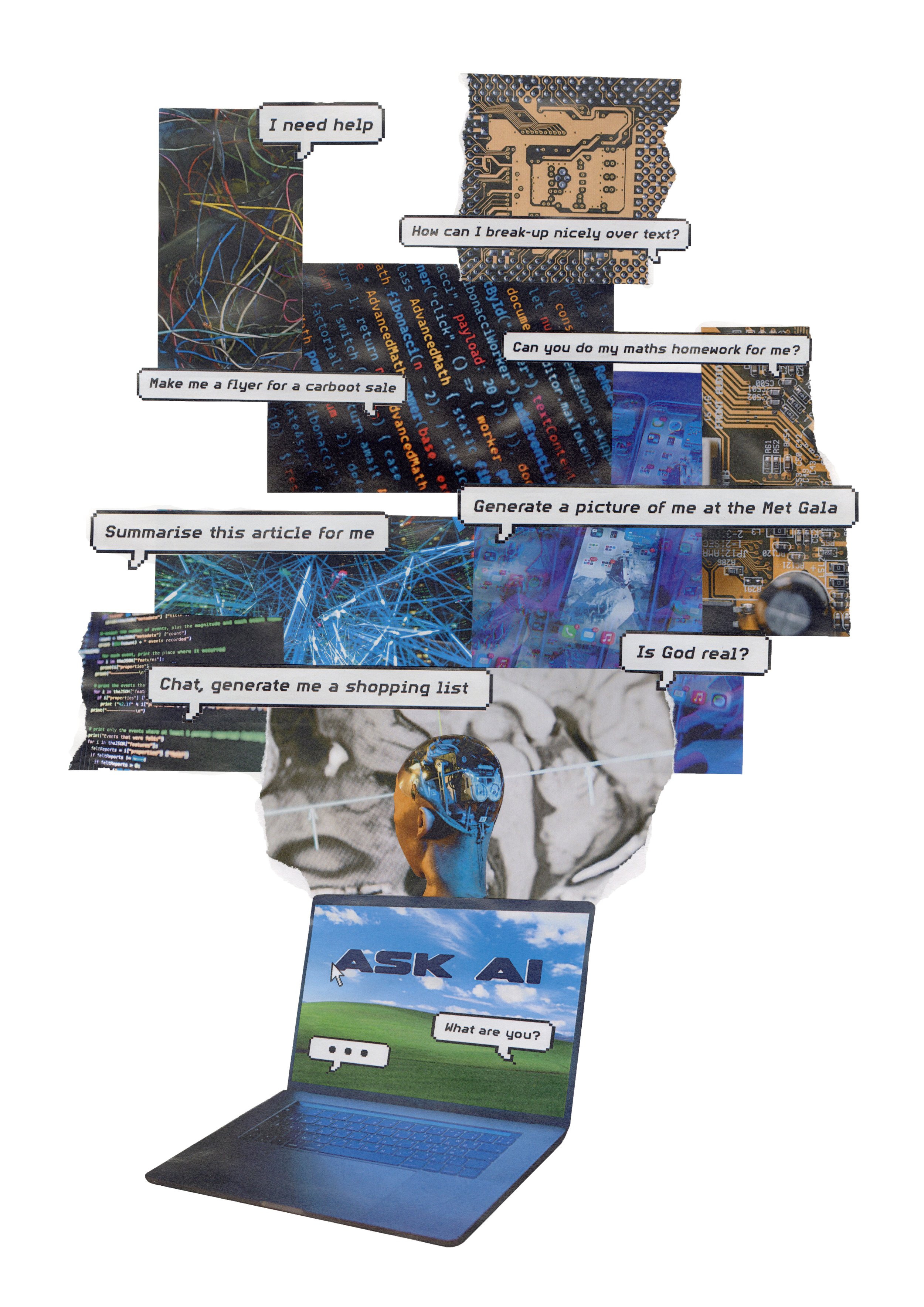
“Ask AI”
Mixed media collage, on paper
What things do you think people most commonly ask AI? This collage visualises the variety of prompts asked to AI chatbots, incorporating humour through mundane prompts alongside more worrying questions relating to personal issues and struggles.
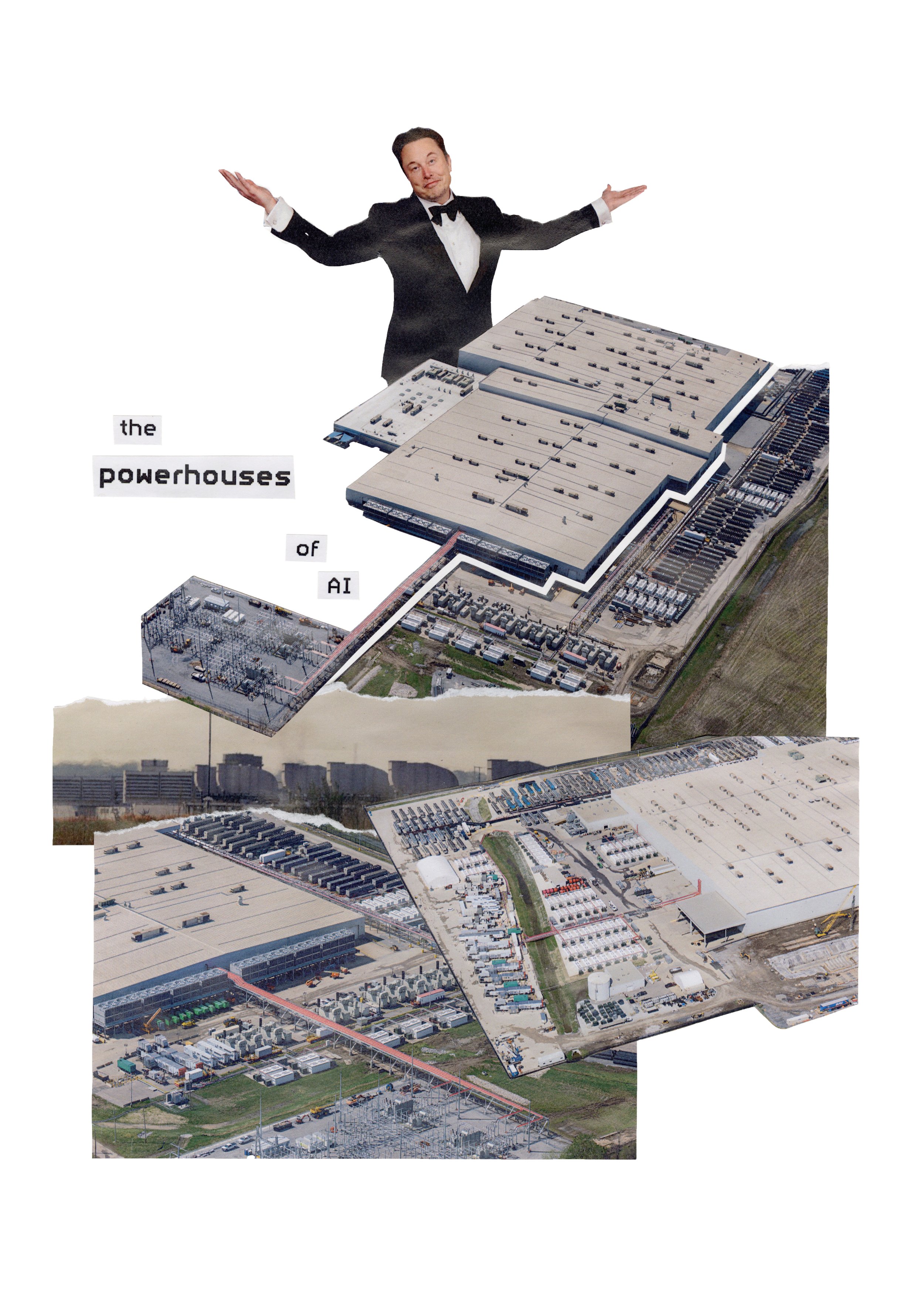
“The powerhouses of AI”
Mixed media collage, on paper
The structures behind AI: the datacentres themselves and the powerful people and companies who build them. Using images of xAI Colossus, a datacentre built to power Elon Musk’s AI chatbot ‘Grok’, this collage aims to conceptualize the scale of modern datacentres.
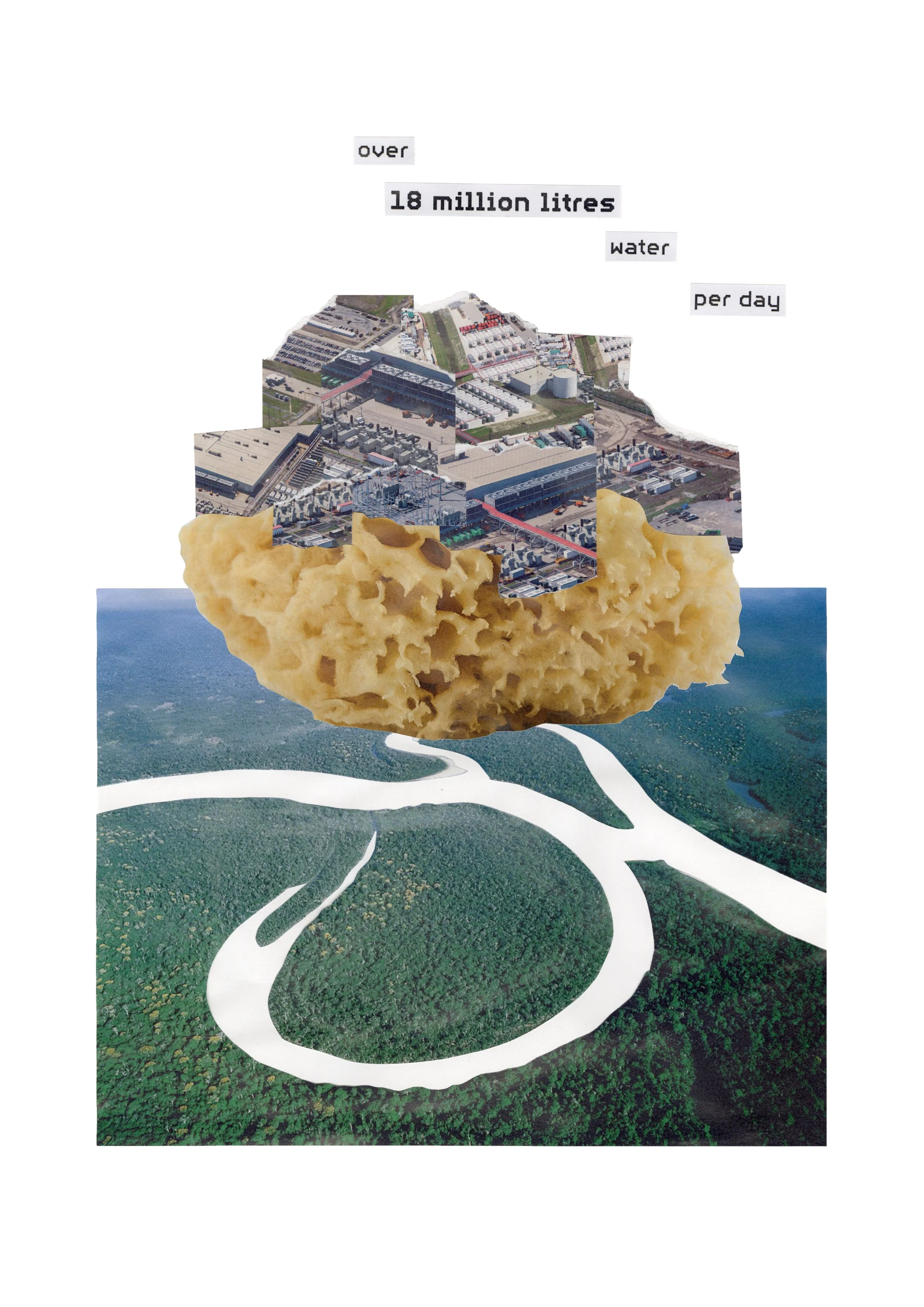
“The datacentre sponge”
Mixed media collage, on paper
By interlacing a datacentre into to a sponge, this collage incorporates satire to lighten the message behind the excessive water use of datacentres built for generative AI.
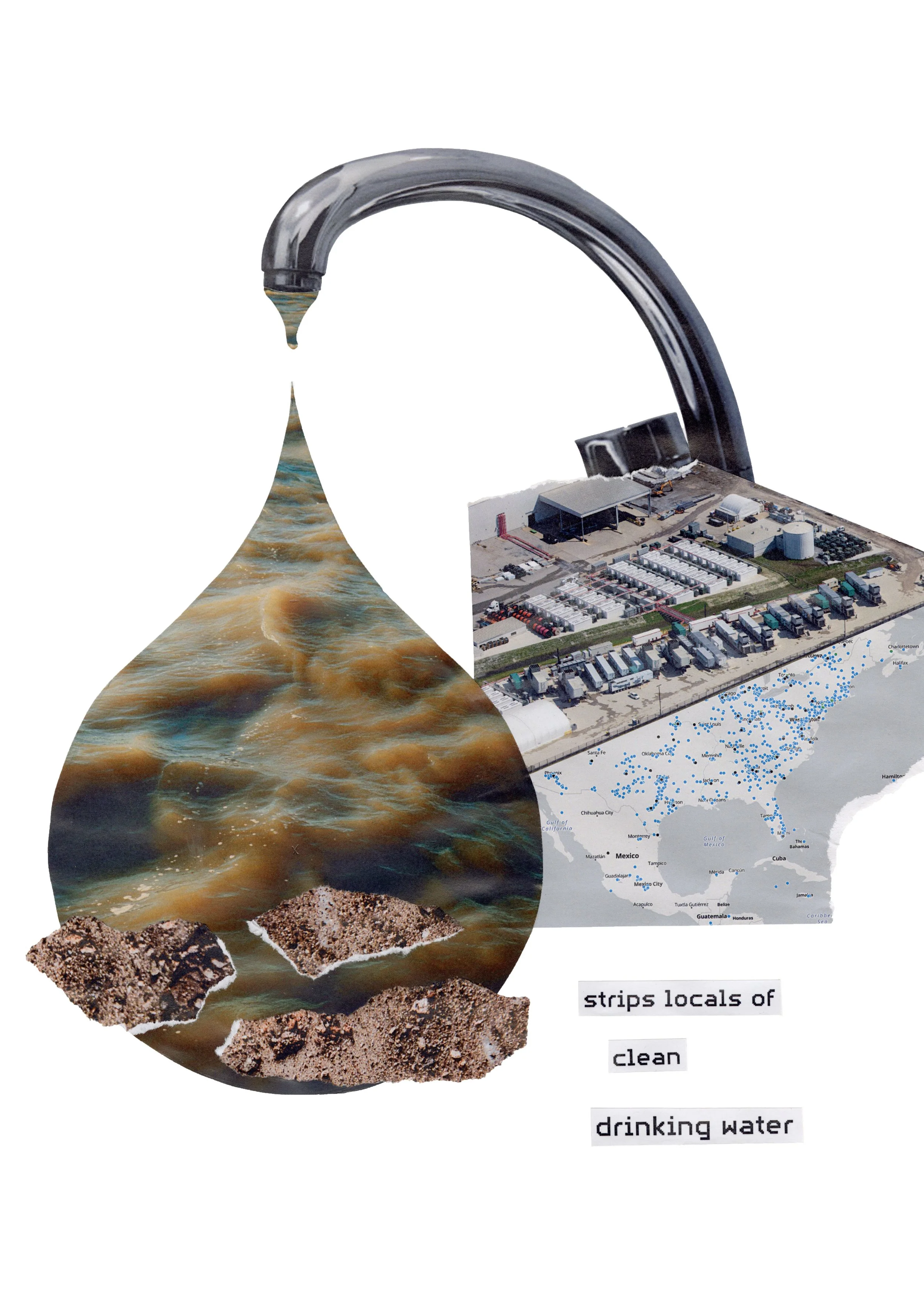
“Contaminated”
Mixed media collage, on paper
This collage highlights how the water usage of datacentres directly effects residents living nearby to datacentres, specifically in the US. Water becomes contaminated, leaving communities with limited amounts clean, drinking water.
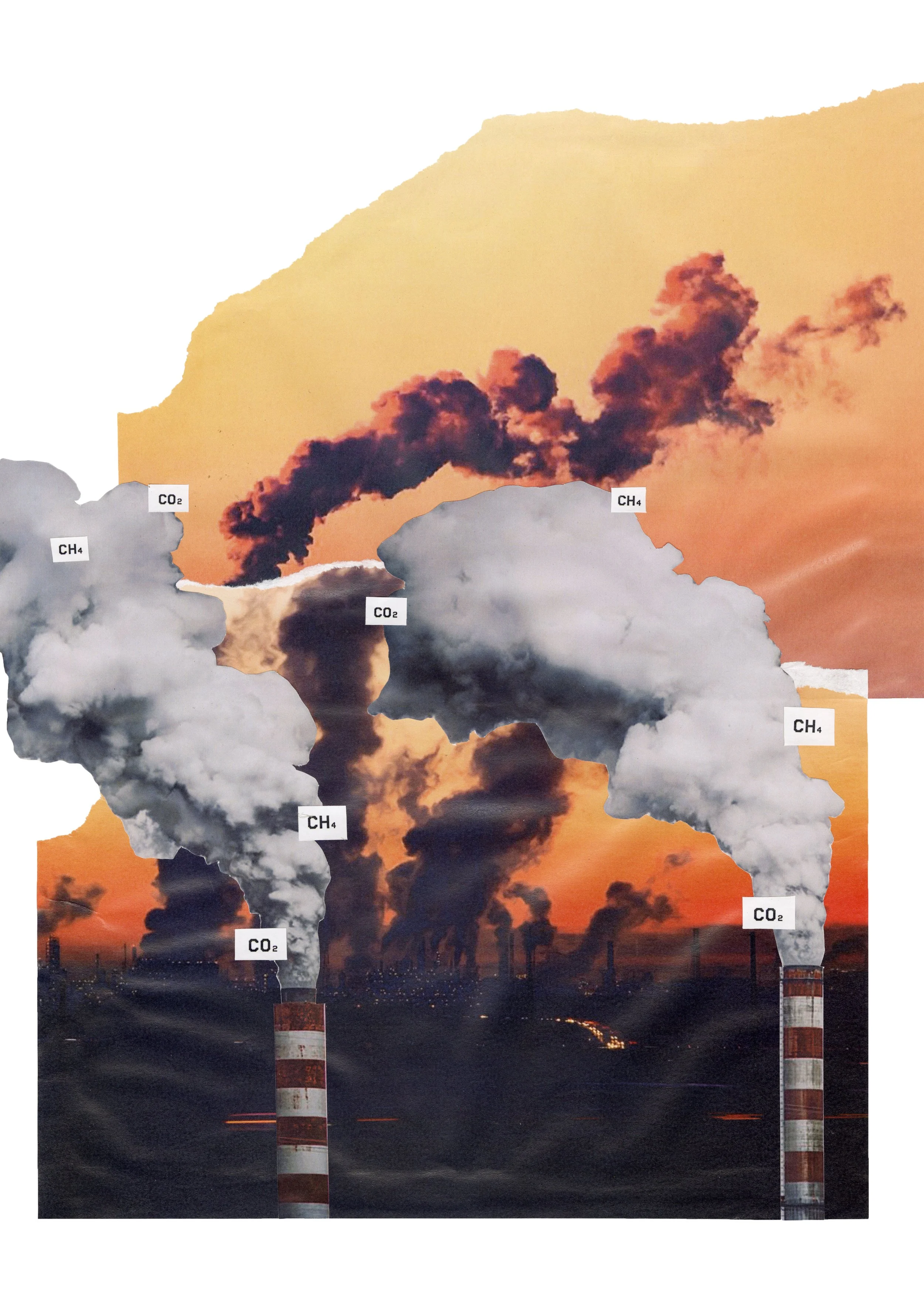
“Emissions”
Mixed media collage, on paper
By creating an oversaturated visual of greenhouse gas emissions, this piece aims to visualise the amount of carbon dioxide (CO2) and methane (CH4) being emitted by the fossil fuels that power AI datacentres.
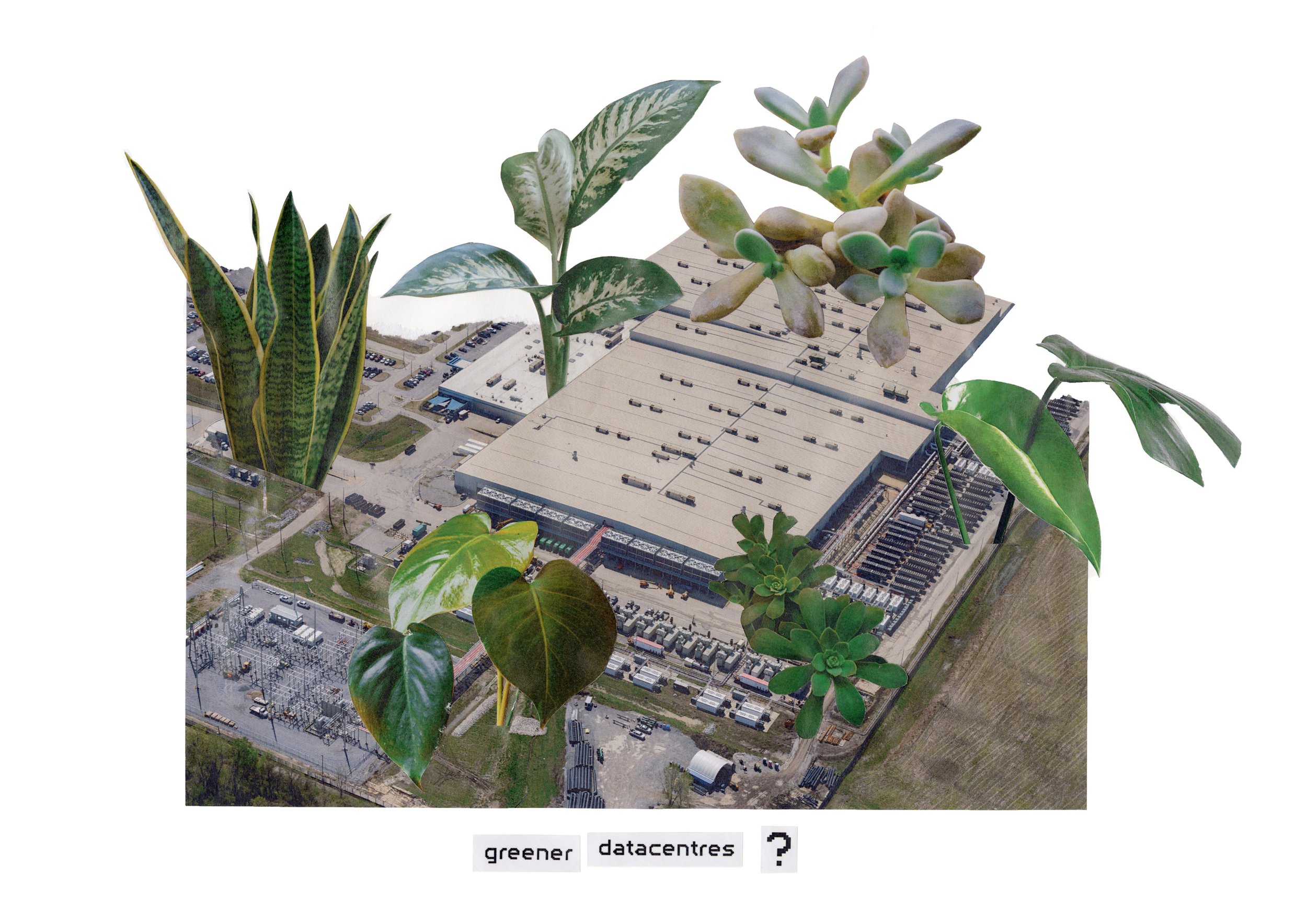
“Greener datacentres?”
Mixed media collage, on paper
Can datacentres be more sustainable? Through layering images of green plants against an industrial datacentre, this collage uses irony to emphasise how datacentres could be more ‘green’ if more legislation was enforced about sustainable infrastructure.
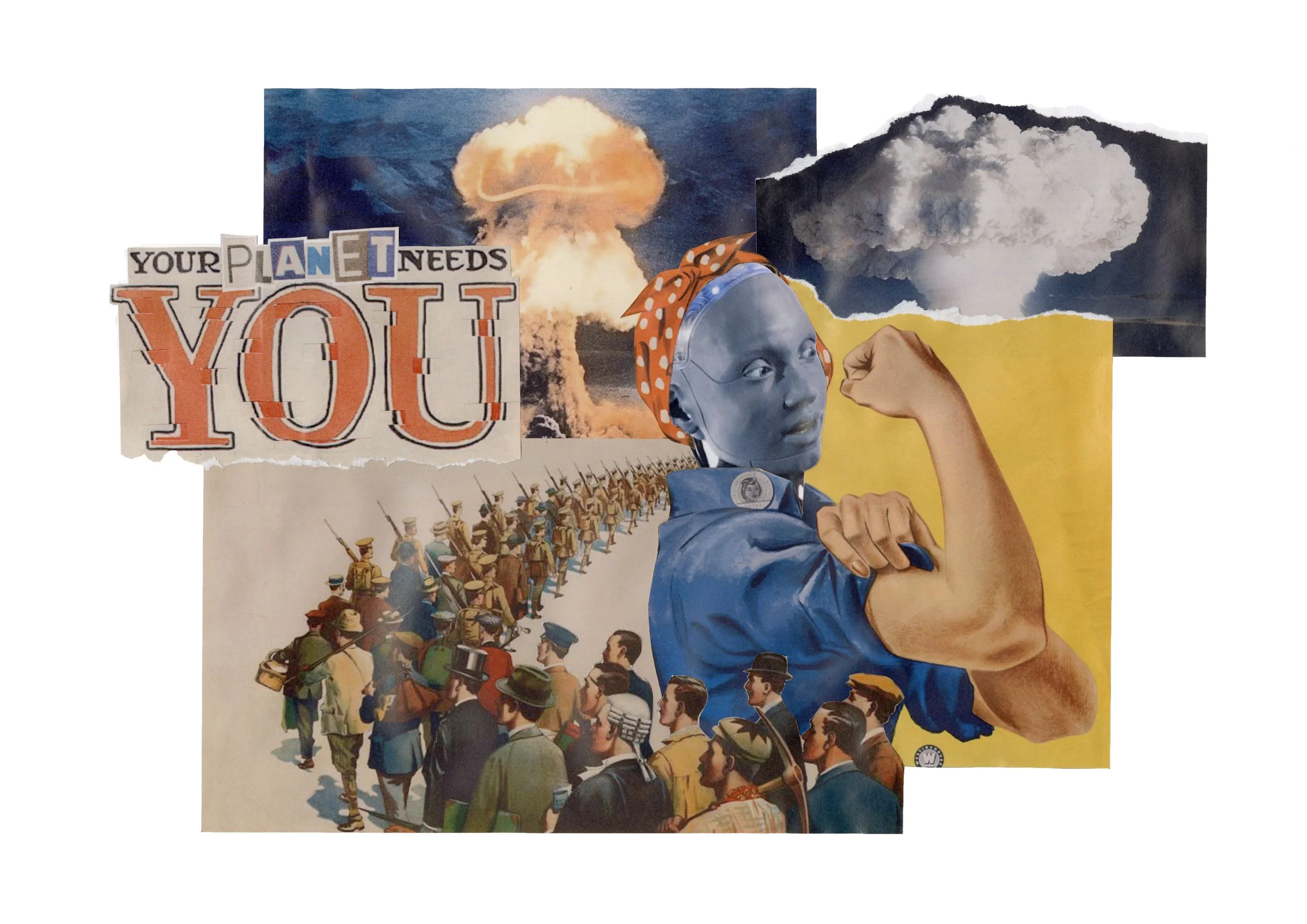
“Your planet needs YOU”
Mixed media collage, on paper
By using recognisable war posters, this collage aims to comment on the potential ‘war’ against AI. Although it is mainly up to the companies who build datacentres to be more sustainable, there are small ways we can avoid AI in our everyday lives.
The Exhibition
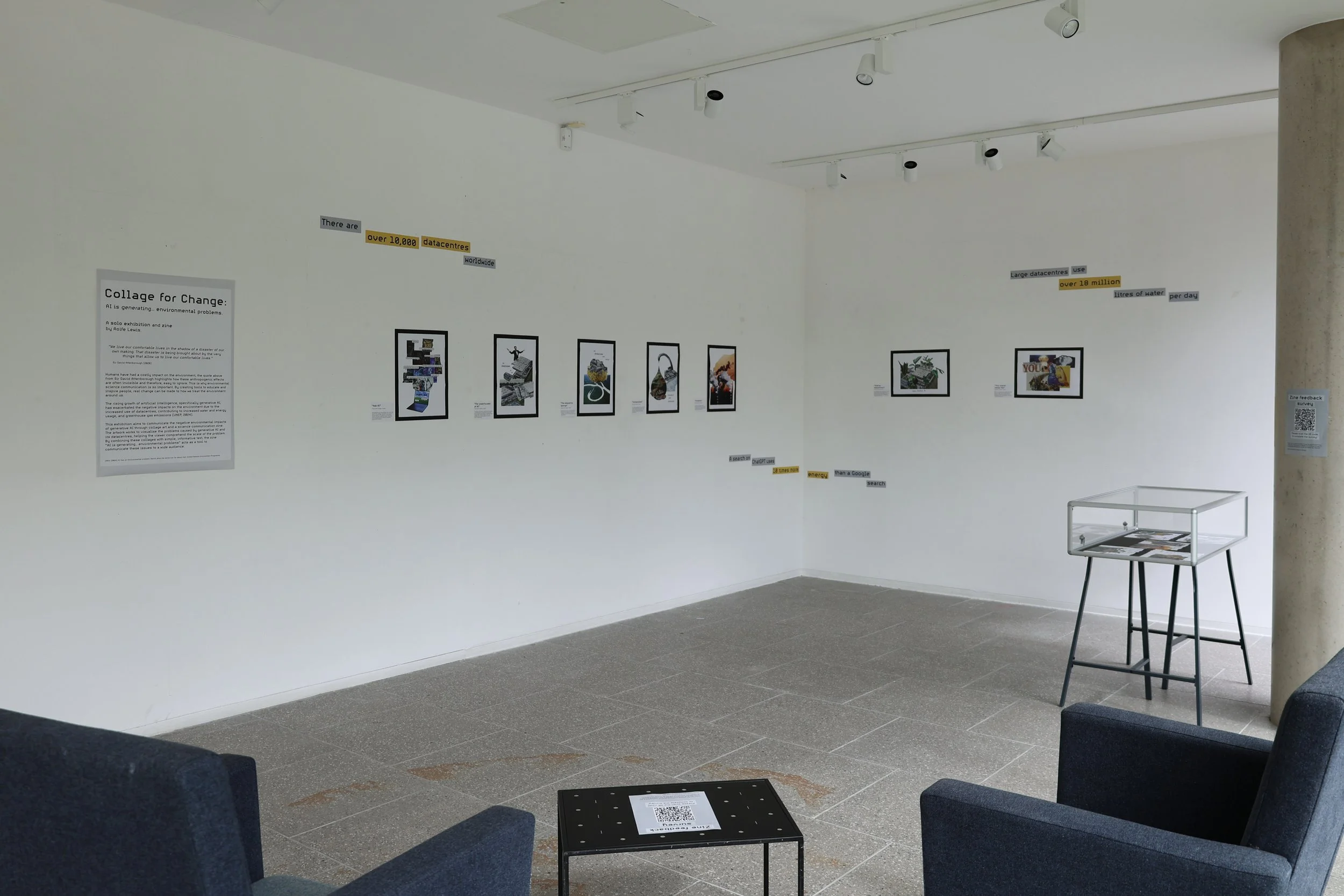
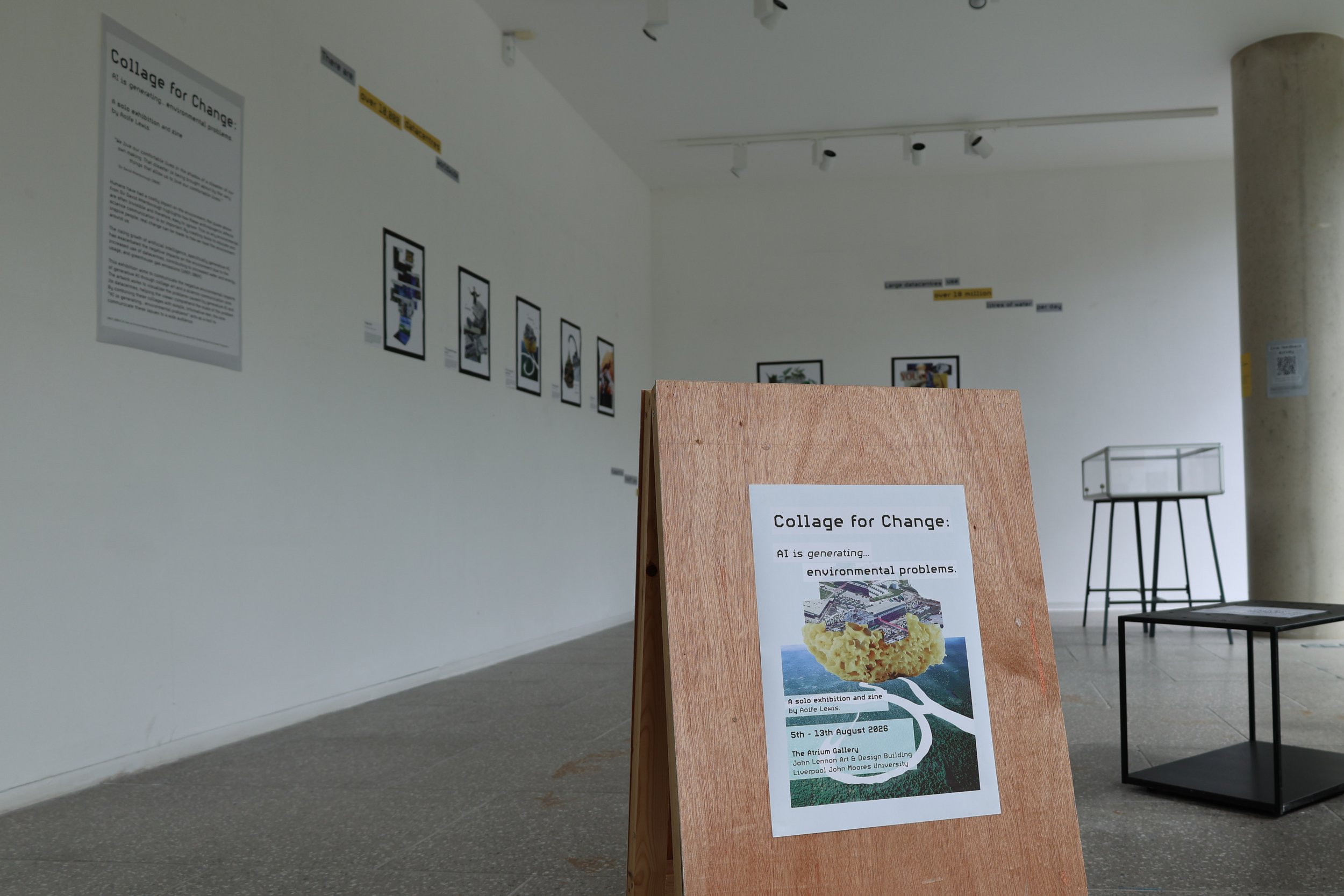
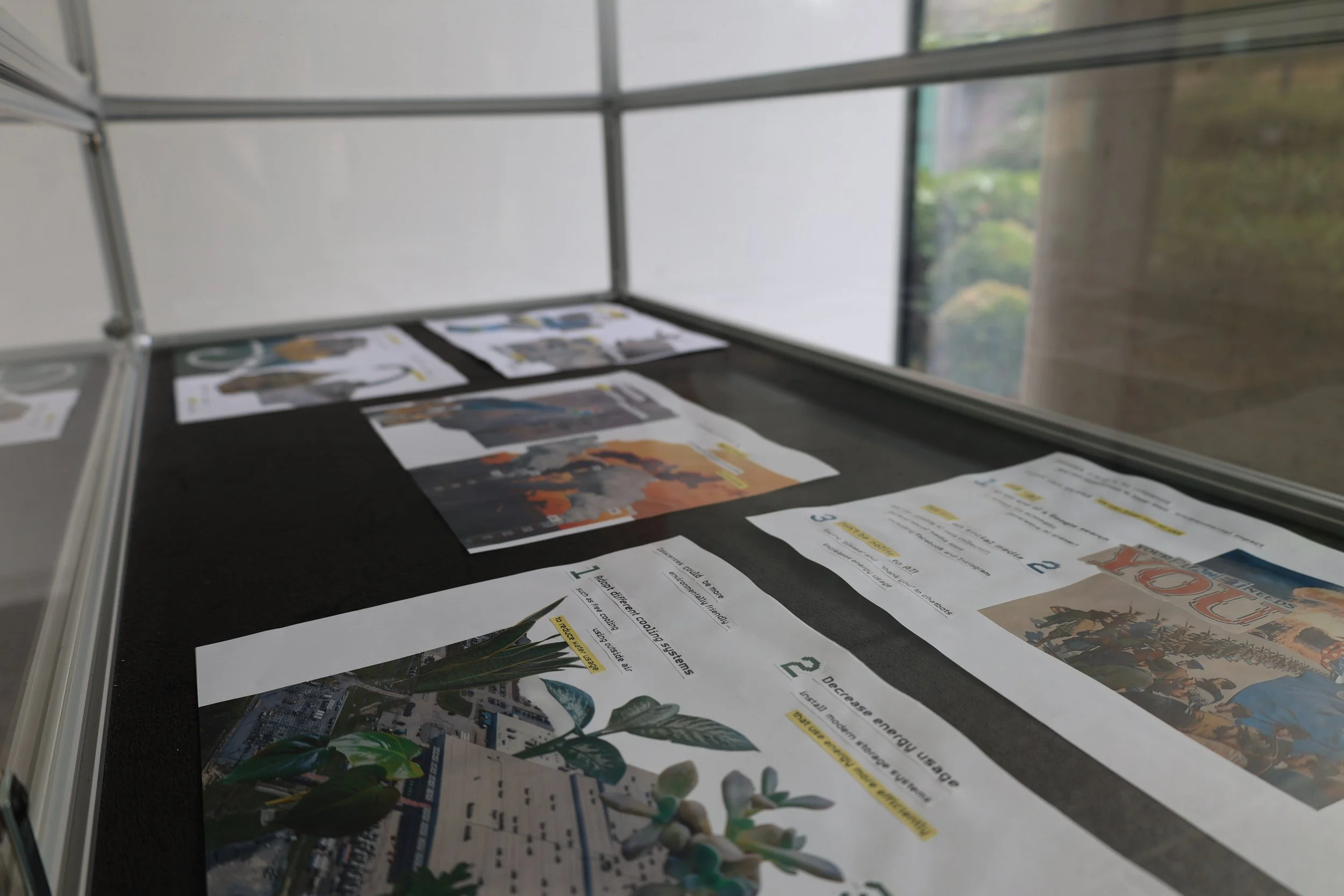
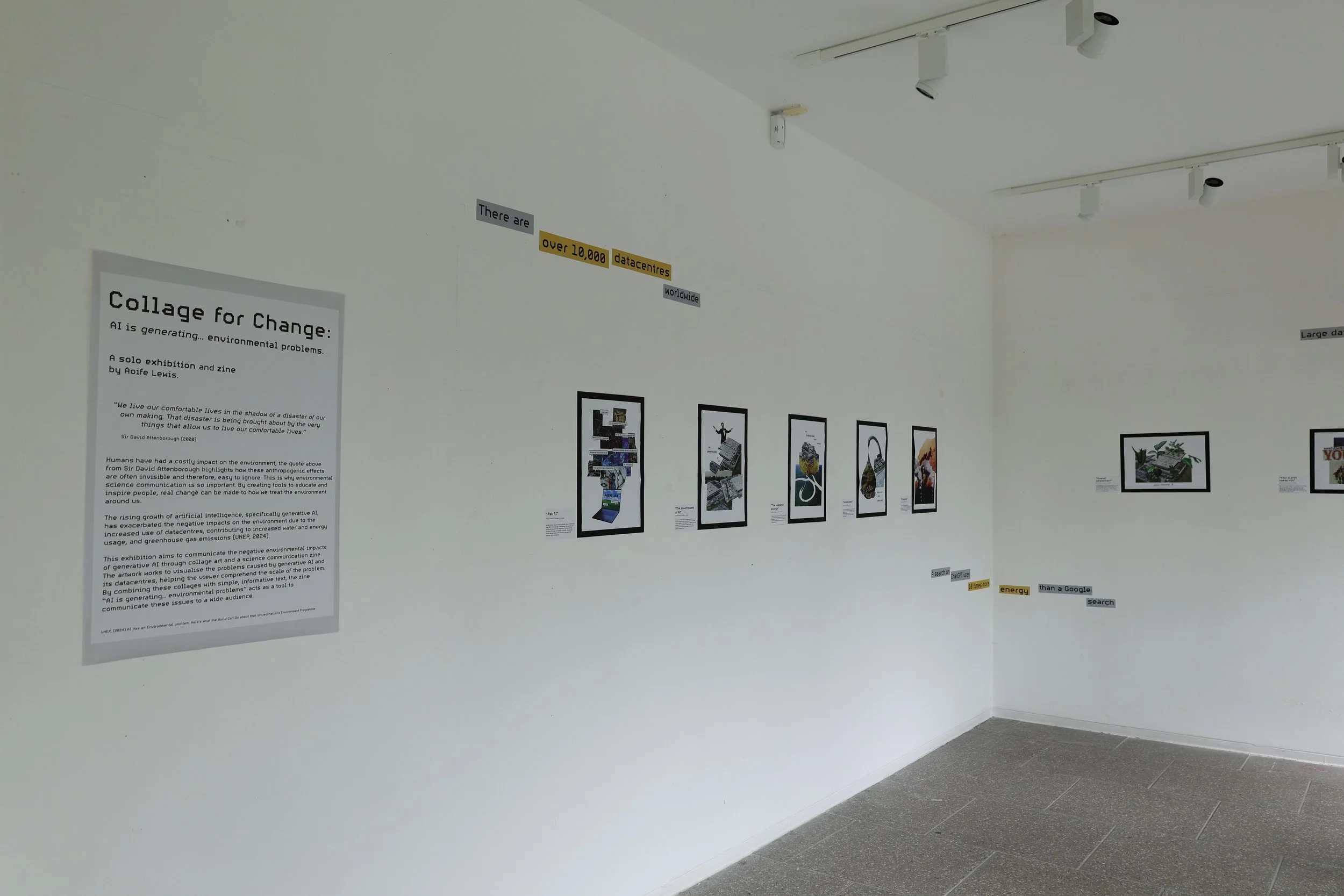
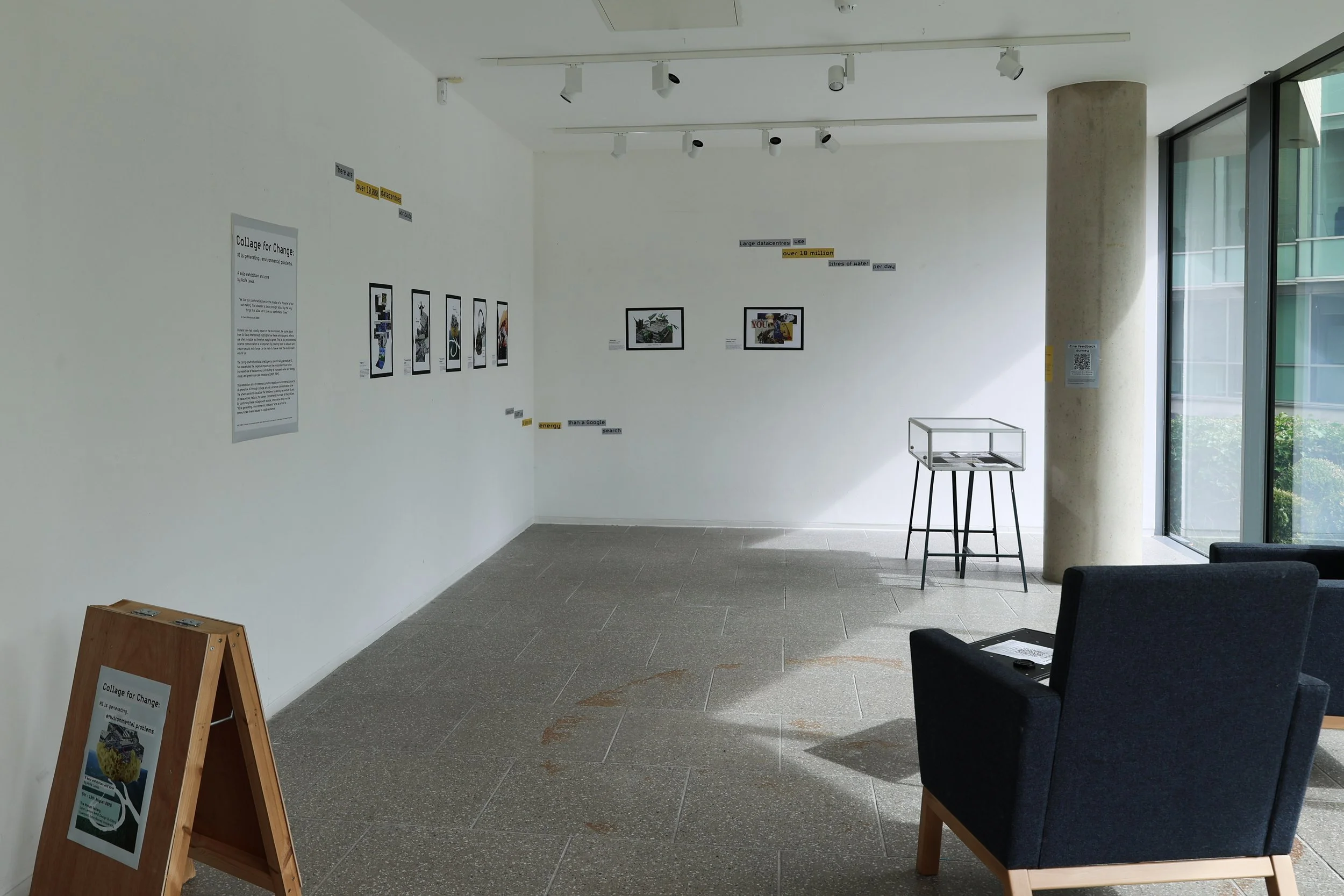
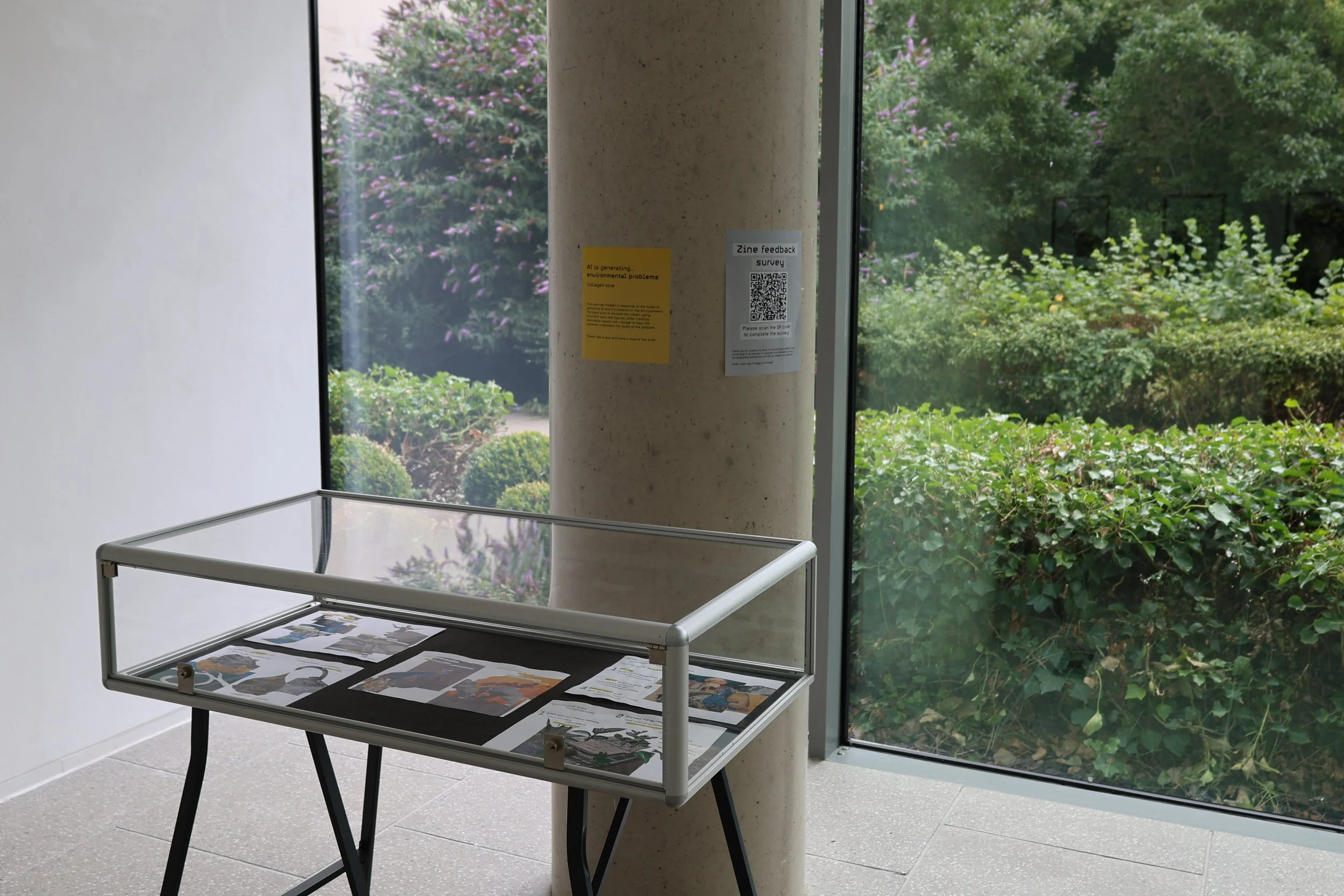
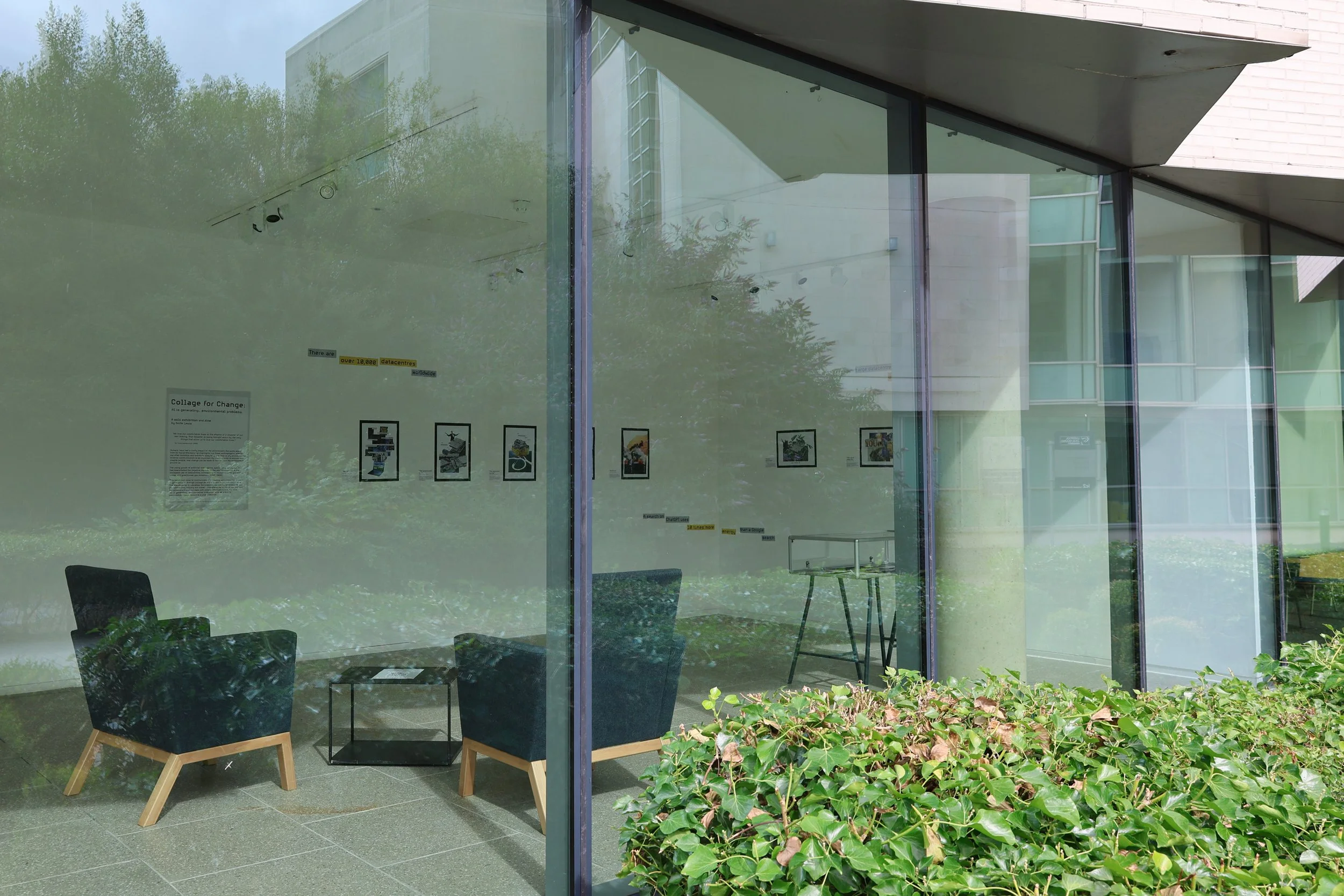
In the Atrium Gallery in the John Lennon Art and Design Building, LJMU, the collage artworks and zine were exhibited in August 2026. The exhibition included seven A3 collage prints mounted on the wall, a vitrine with collaged originals of the 12-page zine, and a reading nook with printed zines available to read.
These were accompanied with an exhibition statement and placards explaining the science and the collaged visuals. In addition, the walls were decorated with large, collage-style text similar to that within the zine. The three pieces of text were striking facts with figures that were within the zine. By mounting them on the walls of the exhibition, the space became a collage within itself, aiming to make the viewer feel as if they were walking into the zine.
Within the exhibition, there were QR codes that linked directly to the zine feedback survey, available for if people wanted to participate in the research, after they had finished reading the zine.
The Survey
The anonymous survey was successful in collecting varied feedback on the zine. It was designed to ask the viewer about their knowledge on the topic before viewing the zine, about their opinions on the visuals, text and composition of the zine and their view and knowledge on the topic after reading the zine.
80%
said they had some or limited knowledge of the environmental impacts of generative AI before viewing the zine.
100%
said they were quite/extremely confident having a conversation about these issues, after reading the zine.
85%
said that the zine was very successful in communicating the environmental issues of generative AI.
75%
said that they would definitely consider using methods to reduce their AI use going forward.
100%
said that seeing collaged visuals helped further their understanding of these environmental issues.
“The contaminated water coming from the drinking water tap feels particularly striking and a good warning symbol for the immediate future.”
“The contrast between the text and the images compliment each other very well in terms of colour palette and context.”
“The absence of water in the Amazon river, and the sponge/datacentre soaking it up, is memorable.”
“The images are striking and catch the eye. There's also a sense of fun and humour. Especially given the serious and concerning topic.”